DWEL's Caregiving Benefit
DWEL's Voice-First Care Orchestration Platform is designed to be a key component of an enterprise's Wellness Benefits. DWEL improves productivity by orchestrating the most time-consuming tasks an employee caregiver routinely faces – improving work-life balance, absenteeism, presenteeism and churn. That can drive ROI of more than 1,000%, compared with the average wellness benefit ROI of negative 150%.
$39B
Annual impact of caregiving on Enterprise ROI
24 hrs
Caregiving per week
9.5 hours during work time
+10 days
Absenteeism
11 more absent days per year, mostly unplanned
16%
Presenteeism
18% reduced productivity even while at work
31%
Early retirement
35% leave the workforce early due to caregiving
True cost of caregiving on employers
$13K
Avg. Annual Cost
Average annual cost per employee-caregiver to the employer — driven by lost productivity, absenteeism and early resignations
70%
Workforce Attrition Risk
Of employee-caregivers experiencing, considering, or forced to take actions that lead to leaving the workforce
400%
Replacement Cost
Of annual salary — cost to replace a senior manager who leaves due to caregiving responsibilities
The 80+ surge is driving a caregiving gap
The U.S. 80+ population is growing faster than caregiving capacity. This gap is becoming a workforce risk, increasing absenteeism, distraction, and retention pressure as more employees take on complex elder care responsibilities.
150M
Adults aged 80 and over worldwide growing several times faster than total population
45-70
Ages of those that shoulder the caregiver burden
19M
Projected U.S. population 80+ by 2030, an 65% increase over 2010
94%
Of U.S. seniors 65+ prefer to age in place, living independently
U.S. Aging Population Growth (2020–2050)
Caregiver estimates reflect employed family caregivers supporting adults age 80+. 2030–2050 values are scenario-based projections derived from AARP caregiving data and U.S. Census population projections.
U.S. population age 80+ is projected to more than double by 2050, while the growth of employed family caregivers does not keep pace, increasing pressure on working families and employers.
Sources: U.S. Census Bureau population projections; AARP, Caregiving in the U.S.; World Health Organization (WHO)
HR Admin Dashboard
Track adoption, productivity gains, and financial impact in one place. Real-time visibility into how DWEL is performing across your workforce.
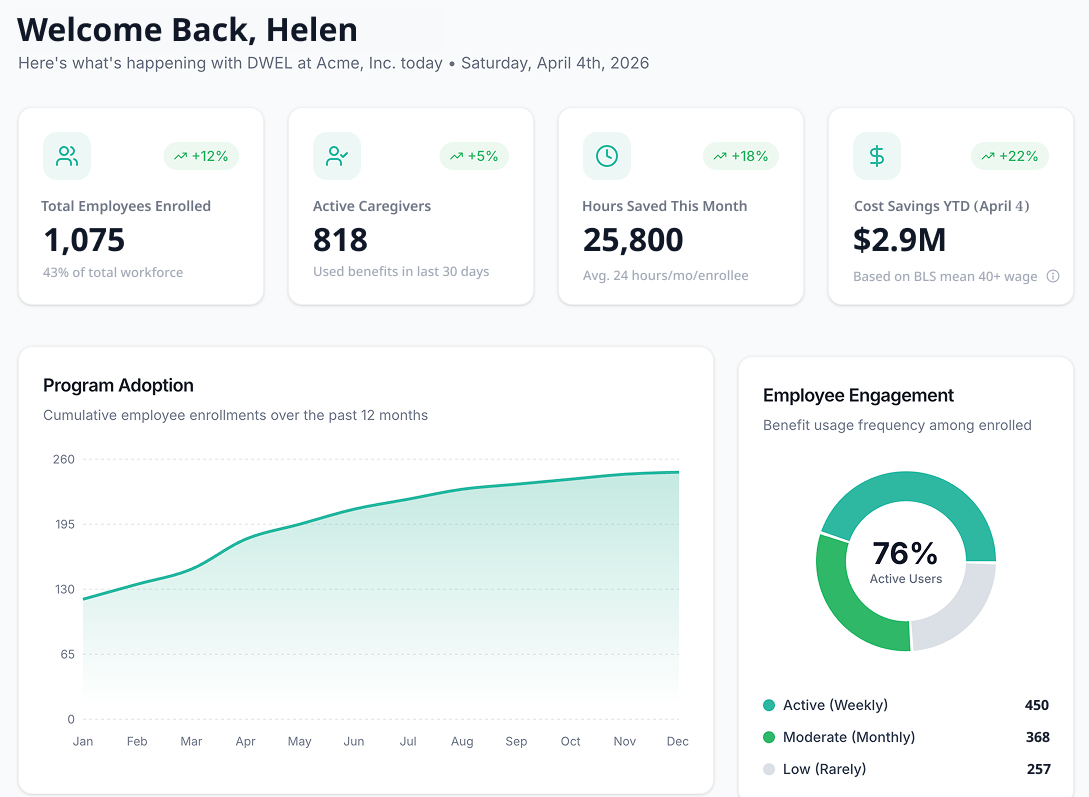
Cost savings used a mean hourly wage estimate of $36-$39/hour, age 40+ derived from the U.S. Bureau of Labor Statistics Current Population Survey 2025.
Drive significant ROI while improving work-life balance for your team.
Learn how care orchestration reduces workplace disruption.